
Tracing African American ancestry requires more than a standard records search. It requires experience with historical records shaped by enslavement, migration, and reconstruction. Our researchers work across pre- and post-emancipation records to build a clear and documented African American family history.
Professional African American Genealogy Research Service
54
Generations Traced
200
African American Families Researched
4.9
Average Client Rating
100
Satisfaction Guaranteed
Tracing African American Ancestry Means Working Across Difficult Records
African American genealogy is one of the most detailed yet complex areas of historical research, shaped by the reality that many enslaved individuals were not recorded by name before 1870 and instead appear in indirect records like slave schedules and estate documents. Although documentation improves after emancipation, gaps remain, making it challenging to clearly connect generations without careful analysis and historical context. Sapling is built for this depth of work, using a wide range of sources to verify identities and construct a clear, evidence-based family history.
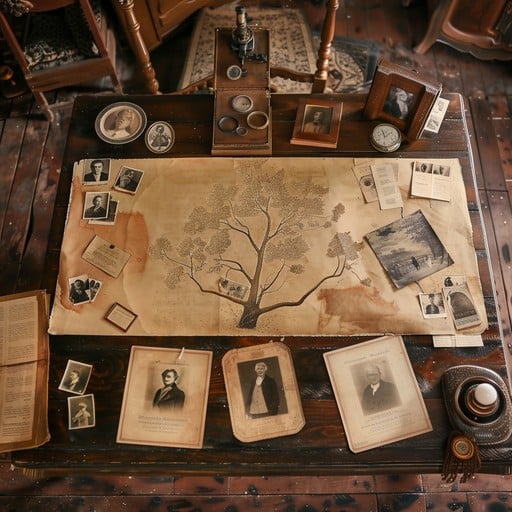
The Records We Use to Build Your African American Family History
From Freedmen’s Bureau files and census records to plantation and estate documents, we use all available sources to build a documented African American family history.
Freedmen’s Bureau and Reconstruction Records
Contracts, assistance records, and registers that help connect families immediately after emancipation.
U.S. Federal Census Records
Named census records from 1870 onward, along with earlier slave schedules used to identify possible family links.
Plantation and Estate Records
Wills, inventories, and probate documents that may reference enslaved individuals and family groupings.
Church and Community Records
Baptism, marriage, and burial records from Black churches and local communities.
Military Service Records
U.S. Colored Troops and other military records that provide personal details and family connections.
Migration and City Records
Documents related to movement during and after the Great Migration, including city directories and registrations.
DNA and Supporting Evidence
Genetic matches used alongside historical records to strengthen and confirm family connections.
Local Archives and Historical Collections
Regional collections, oral histories, and archival materials that provide additional context.
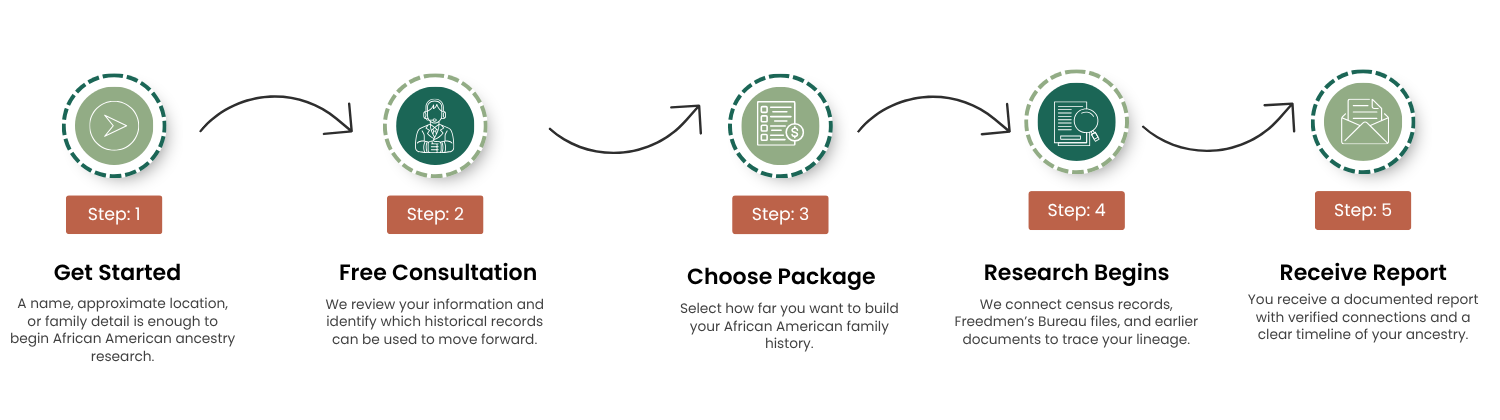
How Our African-American Genealogy Research Works
The process is structured, even when the records are not.
What They Have Said About Us
Clients value the clarity, accuracy, and care we bring to every project. Here’s how our research and reporting have helped them understand their family history
Frequently Asked Questions
Understanding how Sapling works can help you feel confident about starting your family history project. Here are answers to the questions we hear most often
1. What are the best ways to begin African American genealogy research?
Online platforms such as FamilySearch and Ancestry can help at the start. However, research before 1870 often requires working with records that are not fully digitized.
2. Should I hire an African American genealogist?
This type of research involves complex historical records and gaps that require specialized experience. Working with someone who understands these records improves both accuracy and depth.
3. How are African American census records used in genealogy?
From 1870 onward, individuals are recorded by name in U.S. census records. Earlier records, such as slave schedules, require careful interpretation to establish possible connections.
4. Can DNA testing help with African American ancestry?
DNA testing can support research by identifying potential family connections. It is most effective when used alongside documented historical records.
5. Is it possible to trace ancestry before 1870?
Yes, although it requires working across multiple record types, including estate records, plantation documents, and Freedmen’s Bureau files. Progress depends on available records and context.
6. What will I receive at the end?
You will receive a structured African American family history report with verified records, documented relationships, and a clear, traceable timeline.
Send Us a Message
Please enter the information below to get your free consultation. Our team of experts will do preliminary research and suggest a package that is right for you.